Authors
News Type
News
Date
Paragraphs

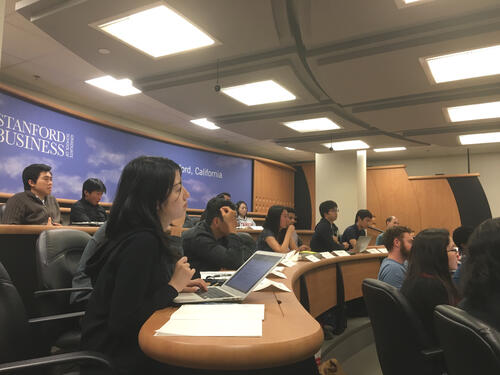
Stanford Medicine faculty Randall Stafford, Judith Prochaska, and Michael Baiocchi held a graduate seminar at SCPKU earlier this summer which brought together students from Stanford and Chinese universities to seek solutions to China's growing problems of cancer, stroke and heart disease.  Read more.

Hero Image
peking symposium
Students from Peking University and Stanford attended a seminar led by Michael Baiocchi (front, far left), Randall Stafford (front, second from right) and Judith Prochaska (front, far right).
Kenny Fu
All News button
1
Authors
News Type
News
Date
Paragraphs

A new course jointly taught by Stanford and Peking University brought together students and scholars in China and the United States in dialogue using videoconferencing.

Each week during the past spring quarter, students at Stanford and Peking University (PKU) gathered in a classroom to learn, just as they would for any other course. The only difference was these students were neither in the same classroom nor on the same continent.

Despite being separated by nearly 6,000 miles, 18 students in Palo Alto and 28 students in Beijing held ‘face-to-face’ conversations via high definition videoconference in a course taught by American and Chinese scholars. On each side, they sat in a three-rowed amphitheater and looked directly ahead – not at a whiteboard – but at a screen that projects a video ‘wall’ of their colleagues at the other campus. The venue, known as a ‘Highly Immersive Classroom,’ enabled the distance learning experience between the two universities, using advanced software to create a cross-Pacific virtual classroom. The course titled The United States, China, & Global Security, led by former U.S. Ambassador to Afghanistan Karl Eikenberry and PKU professor Fan Shiming, was organized under the auspices of the U.S.-Asia Security Initiative whose research focuses on security challenges in Asia with teaching as one of its core activities.

“We set out to host a course that addressed topics critical to China and the United States in a new type of classroom format,” said Eikenberry, the Oksenberg-Rohlen Distinguished Fellow in the Shorenstein Asia-Pacific Research Center and director of the Initiative. “What resulted was a truly unique academic exchange that considered topics even beyond the bilateral relationship and carried a certain ‘Silicon Valley spirit’ being divided by an ocean yet connected through technology.”

“I loved the cybersecurity class because there was a lot of candor on both sides.”

-Shan Jee Chua, PKU graduate student

Over eight weeks, a select group of graduate students from the two universities explored a wide array of subjects related to international security, ranging from terrorism to trade and energy and the environment. The course aimed to provide students with a forum to discuss current issues in U.S.-China relations and to analyze areas that could be applied to other case studies. 

“Because each week was a different topic, it didn’t feel like I was just thinking about the United States and China again every Wednesday night,” said Sam Ide, a Stanford graduate student who studies China’s relations with Central Asia. “Each session was very interesting to me in a different way.”

Guest-taught by prominent scholars and former senior government officials from the United States and China, the course sessions allocated thirty minutes for each lecturer to present, followed by a thirty minute question-and-answer period in which students were given the opportunity to interact with the lecturers and their peers on the other campus. Lecturers from Stanford included nuclear scientist Siegfried Hecker, former U.S. Secretary of Energy Steven Chu, and Thomas Fingar, a former deputy director at the U.S. Office of the Director of National Intelligence; and from PKU, Dean of the School of International Studies Jia Qingguo, and arms control and disarmament expert Han Hua. All discussions were off-the-record to encourage candid exchange of ideas. 


Image
course 3

At Stanford's Highly Immersive Classroom in Palo Alto, students look ahead at their counterparts in Beijing.


One course session in particular resonated with students. The session, taught by Zha Daojiong, a professor of political economy at PKU and Herbert Lin, a senior research scholar at Stanford’s Freeman Spogli Institute for International Studies, focused on the changing nature and future of cybersecurity relations between China and the United States.

“I loved the cybersecurity class because there was a lot of candor on both sides,” PKU student Shan Jee Chua recalled.

Kimberly Chang, a second year Stanford graduate student in management science and engineering, noted that it was beneficial to hear the Chinese view on cyber “because most of the talk within the United States has been from an American perspective.”

“Hopefully, I'll be able to meet some of these people in real life who I've met on the 'wall.'”

-Sam Ide, Stanford graduate student

The course revealed a broader range of perspectives and provided a chance to interact first-hand with international colleagues while remaining at their home campus. Discussion amongst peers uncovered the “behind the scenes stories” and added context to media reports found online or in print, said Seung Kim, a student in Stanford’s East Asian studies program.

Besides the technology, a unique aspect of the course was its diversity. More than half of the course participants were international, representing 15 countries beyond China and the United States. That setting encouraged debate and reinforced the notion that “neither the United States nor China is the center of the universe,” said Zhu Jun Zhao, a PKU international relations student.

When students were asked what could bring about better understanding between China and the United States, continued dialogue was a common answer. The future of U.S.-China relations rests in the hands of people talking to one another: “I think we need more honest conversations,” Chang said.

And for some students, an opportunity to hold those conversations in-person may be close. Ide said he anticipates traveling to Beijing over the summer and plans to try and meet with a few of his counterparts whom he met through the course.

“Hopefully, I’ll be able to meet some of these people in real life who I’ve met on the ‘wall.’”

Related Links:

Video showcases SCPKU's Highly Immersive Classroom enabling co-teaching across the Pacific

Hero Image
course 2
At the Stanford Center at Peking University in Beijing, Peking University professor Fan Shiming presents his remarks during a session of "The United States, China, & Global Security," a joint course taught by Stanford and Peking University via videoconference; Palo Alto, May 2016.
All News button
1
Authors
News Type
News
Date
Paragraphs

On the heels of the IISS Shangri-La Dialogue, scholars, members of think tanks and former U.S. and Chinese government officials came to Beijing to discuss what many participants considered “the most important bilateral relationship” in the world: the relationship between the United States and China. As former U.S. Ambassador John Negroponte described during his opening remarks, the relationship, “if properly managed,” can result in an enormous boon for the world; but if mismanaged, can bring great harm to global stability and prosperity.

Stanford and Peking University jointly hosted a forum titled “A Changing Global and Political Order: Perspectives from China-United States Cooperation” on June 6-7 in Beijing. All attendees, who participated in their capacity as private individuals, acknowledged that a level of uncertainty and tension clouds the bilateral relationship, exemplified most clearly in the territorial disputes in the South China Sea. Having participated in the restoration of Sino-U.S. relations in 1972, Negroponte and former Chinese Ambassador Wu Jianmin remarked upon the geopolitical rationale that first motivated this rapprochement: to counter the Soviet Union. They noted that the bilateral relationship has grown increasingly robust and multi-dimensional over time. For example, Wu cited that trade between the United States and China has increased exponentially, from a mere US$1 billion in 1978 to $550 billion in 2015. Investment, economic cooperation and competition have also grown. Despite disagreements on regional security matters, both countries have worked together on global challenges such as climate change, North Korean and Iranian nuclear issues, anti-piracy efforts and the Ebola outbreak.

However, with China’s rapid rise, both militarily and economically, and as the developing world has gained increasing clout on the world’s stage, many participants suggested that the current global order, originally envisaged in 1944 with the Bretton-Woods Agreement, needed an update. Many participants, especially on the Chinese side, stated that the “balance of power was shifting” with the G7/G8 yielding economic momentum to the G20. The American participants generally did not share Chinese views of a power transition, but conceded that reforms were necessary to the global order to take into account China’s meteoric rise.  Participants did not dispute the benefits that China has derived from the current international order and most agreed that some type of evolutionary change is needed to increase inclusivity. As one participant asked regarding China’s perception of the United States (and vice versa), “Are we foes, enemies or friends?” Despite such ambiguity, U.S.-China cooperation is essential to effecting any type of change.

Questions were rife and specificity was scant with respect to what the key changes were or the mechanisms by which those reforms should be effected, however. Which countries should partake in this decision-making body? Should other entities and institutions other than nation-states be included? What are the rules of participation and criteria for membership? How large should the governing body be? What key reforms need to be undertaken?

Both Negroponte and Wu disavowed the zero-sum mentality of the Cold War, which, Wu stated, continues to impact perceptions on both sides. They both highlighted the critical importance of frequent dialogue by the Chinese and American heads of state and by their militaries. Calling summit-level meetings between the two presidents “indispensable,” Negroponte emphasized that “[both] leaders have to understand [the] viewpoints and attitudes of each country” in order to formulate the right policies. Negroponte added, “[d]iplomacy at that level is probably more important than it has ever been.”

As this summary of the forum is posted, we note with sadness the untimely death of Ambassador Wu Jianmin on June 18, 2016, in a tragic car accident in Wuhan, China.

Related Links:

Photo gallery from the conference

Hero Image
 i5a7017 23
A panel of experts gathered at Stanford Center at Peking University to give closing remarks at a forum titled “A Changing Global and Political Order: Perspectives from China-United States Cooperation” on June 7.
Courtesy of Peking University
All News button
1
News Type
News
Date
Paragraphs

In Spring 2016, Stanford's U.S.-Asia Security Initiative launched an innovative new graduate-level course - "The United States, China, and Global Security" - a class taught simultaneously at Stanford University and SCPKU on Peking University's (PKU) Beijing campus using a high definition video teleconference facility called the Highly Immersive Classroom.  The course featured topics relevant to current U.S.-China relations and their respective roles in regional and global security.  This video provides course highlights and features commentary from the two lead instructors - Karl Eikenberry, the former U.S. Ambassador to Afghanistan and Director of Stanford's U.S.-Asia Security Initiative, and Professor and Assistant Dean of PKU's School of International Studies, Fan Shiming.


Karl Eikenberry, Stanford's U.S.-Asia Security Initiative Director,
and SCPKU Director Jean Oi lead a session from the Stanford campus.
Photo credit:  Courtesy of Stanford University

Hero Image
dsc 5324 Courtesy of Stanford University
All News button
1
News Type
News
Date
Paragraphs

“The Friends of Beida,” a philanthropic group established in 1996 by Hong Kong entrepreneurs to support the development of Peking University, visited SCPKU on April 16 as part of their 20th anniversary celebration.  The group celebrated 20 years of partnership with Peking University which includes providing Mingde Scholarships to the top two test takers on the college entrance examinations from each province who are admitted to Peking University.  A number of past and current Mingde Scholars joined the celebration at SCPKU.  Lead donor, David Chan and his family, also have been generous supporters of Stanford.  The anniversary celebration truly used SCPKU as a bridge across the Pacific.  Leveraging the teleconferencing facilities at SCPKU and at Stanford, Jean Oi, Lee Shau Kee Director of SCPKU, speaking from Stanford welcomed David Chan and his group who were in the tiered classroom at SCPKU.  Mike McFaul, Director of Stanford's Freeman Spogli Institute for International Studies, and former US Ambassador to Russia, also speaking from Stanford presented “An Analysis of the Upcoming Presidential Election and the Political/Economical Implications to Asia Pacific” and then took questions from the group at SCPKU.  During the highly-interactive session, Michael Chan, an alumnus of Stanford, also announced his family’s generous donation to complete SCPKU's IT facilities, an upgrade that will allow teleconferencing from even more spaces within the center.


Hero Image
dsc 1547 Courtesy of Stanford University
All News button
1
-

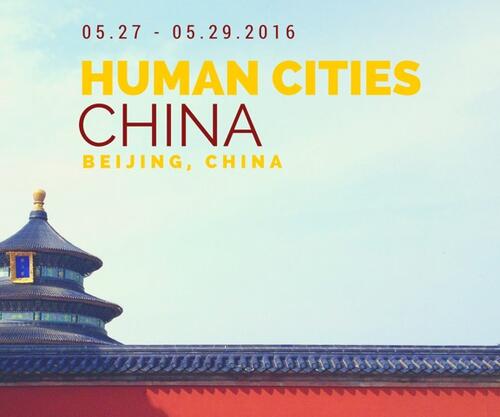
In May 2016, practitioners, researchers, and students will gather in Beijing, China for Human Cities@China to explore alternative pathways for an urban vision in China and one that ultimately creates a more sustainable and human-centered city. Drawing from the theme, Design, Build and Measure the Human City, we invite key experts to engage with American and Chinese students to share case studies and development models that promote urbanism at the neighborhood level. We explore the integration of new technologies and practices of community-scale infrastructure in both greenfield and infill development, as well as compare approaches to urban development in large cities and mid-sized townships. We will discuss how urban design strategies such as density, walkable streets, mixed land use, and small blocks can increase quality of life for people in daily interactions with their neighbors, community institutions, and the built environment. By learning from practitioners’ and developers’ firsthand experiences, attendees will meet new colleagues and collaborators, gain insights into the opportunities and challenges of urban development in China, and explore a framework to advance the human city.

Keynote Speakers:
Dr. Qin Shao, Professor of History, College of New Jersey, Author of Shanghai Gone
Stephen Wong, Managing Director for EWD, Chairman of Chongbang Group

Forum and Roundtable Speakers:
Liqun Chen, China Center for Urban Development, China Crowdsourcing Placemaker Initiative
Dr. Ying Long, School of Architecture, Tsinghua University, Beijing City Lab
Dr. Jing Jing Xu, China Development Bank Capital, Global Green Development Capital
Matthew Hu, Courtyard Institute
Amy Mathieson, China Building Restoration Project

Schedule: http://www.humancities.org/schedule
Speakers: http://www.humancities.org/speakers

Registration required for events open to the public
Register here: https://deland.typeform.com/to/MvBiKA

For more information, visit www.humancities.org/china

Human Cities@China is sponsored by the Stanford Office of International Affairs and organized by the Stanford Human Cities Initiative and Program on Urban Studies with support from Tsinghua University iCenter, Tsinghua Academy of Art and Design, Tsinghua University Department of Construction Management, the Stanford Center at Peking University, Stanford Bing Overseas Program, and the Urban Land Institute.

Image
thumbnail human cities in china


In May 2016, practitioners, researchers, and students will gather in Beijing, China for Human Cities@China to explore alternative pathways for an urban vision in China and one that ultimately creates a more sustainable and human-centered city. Drawing from the theme, Design, Build and Measure the Human City, we invite key experts to engage with American and Chinese students to share case studies and development models that promote urbanism at the neighborhood level. We explore the integration of new technologies and practices of community-scale infrastructure in both greenfield and infill development, as well as compare approaches to urban development in large cities and mid-sized townships. We will discuss how urban design strategies such as density, walkable streets, mixed land use, and small blocks can increase quality of life for people in daily interactions with their neighbors, community institutions, and the built environment. By learning from practitioners’ and developers’ firsthand experiences, attendees will meet new colleagues and collaborators, gain insights into the opportunities and challenges of urban development in China, and explore a framework to advance the human city. 

When:   Friday, May 27, 2016, 10 am to Sunday, May 29, 2016, 4:30 pm

Where:

* Friday, May 27 Human Cities@ China Kick-off at Tsinghua University

* Saturday, May 28 - Deep Dive in the Community at Tsinghua University

* Sunday, May 29 - Human Cities@ China Final Showcase at the Stanford Center at Peking University
 

Admission:  Open to the public but registration is required. Register at https://deland.typeform.com/to/MvBiKA

Keynote Speakers:
Dr. Qin Shao, Professor of History, College of New Jersey, Author of Shanghai Gone
Stephen Wong, Managing Director for EWD, Chairman of Chongbang Group

Forum and Roundtable Speakers:
Liqun Chen, China Center for Urban Development, China Crowdsourcing Placemaker Initiative
Dr. Ying Long, School of Architecture, Tsinghua University, Beijing City Lab
Dr. Jing Jing Xu, China Development Bank Capital, Global Green Development Capital
Matthew Hu, Courtyard Institute
Amy Mathieson, China Building Restoration Project

Schedule: http://www.humancities.org/schedule
Speakers: http://www.humancities.org/speakers

Registration required for events open to the public
Register here: https://deland.typeform.com/to/MvBiKA

For more information, visit www.humancities.org/china

Human Cities@China is sponsored by the Stanford Office of International Affairs and organized by the Stanford Human Cities Initiative and Program on Urban Studies with support from Tsinghua University iCenter, Tsinghua Academy of Art and Design, Tsinghua University Department of Construction Management, the Stanford Center at Peking University, Stanford Bing Overseas Program, and the Urban Land Institute.


Symposiums
(650) 723-9836
0
Professor of Asian Languages and Comparative Literature
ban_wang.jpg PhD
Graduate Seminar Instructor at the Stanford Center at Peking University, June to July of 2017
News Type
News
Date
Paragraphs

Stanford's Graduate School of Business is returning to SCPKU for its third year this fall to run Stanford Ignite, a part-time certificate program in innovation and entrepreneurship.  The program will run from September 2 - November 13, 2016 with classes held on Friday evenings, Saturdays and Sundays at SCPKU. The Stanford Ignite-Beijing program teaches exceptional individuals to formulate, evaluate, develop, and commercialize their ideas into viable business plans. Participants include entrepreneurs, graduate students, and innovators from companies such as Microsoft, Hanergy, Youku Tudou, Jumei.com, Z-Park, Infosys, Amazon, and FocusEdu. For information on eligibility, tuition, and to view a sample schedule, visit the program website. The Round 1 application deadline is May 11, 2016 and interested parties can register for a program information session at SCPKU on April 9.

Hero Image
photo yossi feinberg ignite beijing classroom
Professor Yossi Feinberg teaches Stanford Ignite class at SCPKU.
Stanford Graduate School of Business
All News button
1
News Type
News
Date
Paragraphs

by Kendra Davidson


In 1922, Xiao Youmei, a Chinese scholar and composer, created the original Chinese symphony orchestra to bring the sound of Beethoven to his people for the first time.

On November 12, 2015, Jingdong Cai, associate professor of performance in the Center for East Asian Studies, recreated this historical experience with 15 musicians from the Peking University Orchestra at the Stanford Center in Beijing. “It was something like time travel,” he recalled.  

Read more.


Hero Image
att00003 Courtesy of Peking University
All News button
1
Subscribe to China